
You Qualify for Two Discount Paths Most Carriers Never Mention
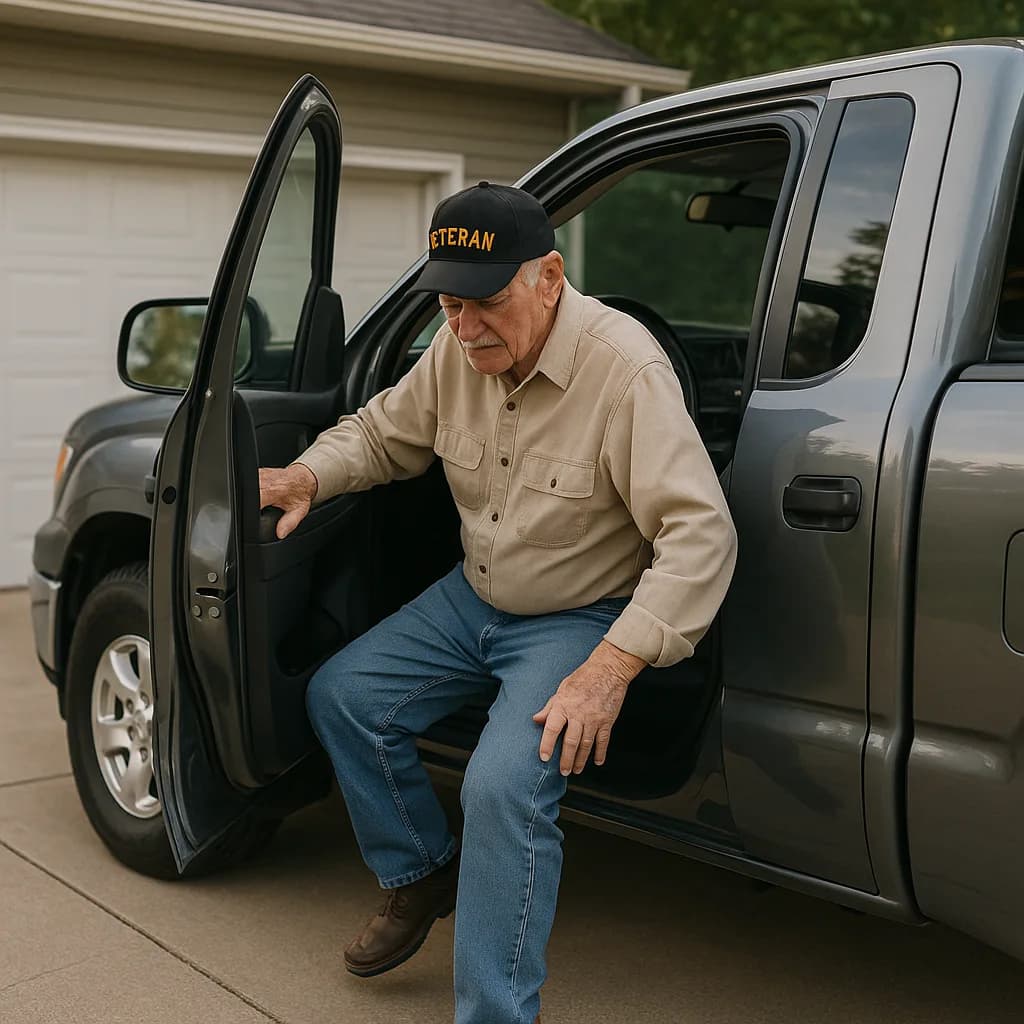
You opened your renewal notice and the premium went up again. No accidents, no tickets, same vehicle. You're a disabled veteran on fixed income and you know other states require insurers to discount for military service or age. North Carolina does not. The state sets no mandate for veteran discounts and no mandate for mature-driver discounts. Carriers offer both voluntarily, set their own percentages, and apply them only when you ask and submit documentation.
Most disabled veterans over 65 qualify for two separate discount paths: a military-service or veteran discount tied to your service record, and a mature-driver discount tied to completing a state-approved defensive driving course. The programs do not overlap and most carriers will not tell you about either one unless you ask directly. Your neighbor with the same profile who called and submitted proof pays less. You kept renewing without asking, so you kept paying full rates.
Compare rates from carriers that specialize in senior drivers
Mature driver discounts, low-mileage rates, and coverage reviews — see what you're actually eligible for.
Get Your Free QuoteNC Bodily Injury Minimum Per Person
$50,000
North Carolina requires $50,000 bodily injury per person, $100,000 per accident, and $50,000 property damage. These are the legal minimums, not coverage-fit recommendations. Disabled veterans with retirement assets or VA disability income face exposure above the minimums in an at-fault accident.
North Carolina General Statutes Chapter 20, Financial Responsibility Act
North Carolina Has No Veteran Discount Mandate
North Carolina law does not require insurers to offer discounts for military service, veteran status, or disability rating. Carriers offer them voluntarily as underwriting programs. USAA, Armed Forces Insurance, and Navy Federal write only for military-affiliated households. State Farm, GEICO, Progressive, and Nationwide offer veteran discounts to the general market but set their own eligibility rules and percentages.
The discount typically requires proof of honorable discharge (DD-214) and in some cases proof of VA disability rating. Some carriers apply the discount automatically when you provide documentation at quote time. Others require you to request it at each renewal. Most disabled veterans never ask, so the discount never appears on the policy.
The mature-driver discount operates on a separate track. North Carolina has no statutory mandate requiring insurers to offer it, per North Carolina General Statutes § 58-36-30. Carriers may offer one voluntarily. When they do, it requires completion of a state-approved defensive driving course and submission of the certificate. The percentage is set by carrier filing. You must ask what your carrier offers and verify the course provider is on the approved list before enrolling.
Your carrier will not tell you what discounts you qualify for unless you ask. Most disabled veterans over 65 are eligible for both veteran and mature-driver discounts but never submit the documentation, so they pay full rates at every renewal.
What You Need to Request Both Discounts

For the veteran discount: call your carrier or agent and ask whether they offer a military-service or veteran discount and what documentation they require. Most accept a copy of your DD-214 showing honorable discharge. Some ask for proof of VA disability rating if the discount percentage increases with rating level. Submit the documentation by email, fax, or through the carrier's online portal. Ask the agent to confirm the discount appears on your next renewal declaration page.
For the mature-driver discount: ask your carrier what percentage they offer and whether they require course completion. If yes, ask for the list of state-approved course providers. Enroll in an approved course, complete it, and submit the certificate to your carrier before your renewal date. The discount applies only after the carrier receives and processes the certificate. Most certificates expire after three years, and the discount lapses unless you complete a new course and resubmit.
Related Articles





Coverage Fit for Disabled Veterans on Fixed Income
Disabled veterans on VA disability income face the same coverage-fit question every senior driver does: whether full coverage remains cost-justified on a paid-off vehicle. Full coverage means comprehensive and collision on top of liability. Comprehensive covers theft, weather, and vandalism. Collision covers damage when you hit something or roll the vehicle. Both carry deductibles, typically $500 or $1,000.
If your vehicle is worth less than ten times your annual collision premium, dropping collision is a judgment call. If it is worth less than five times, most financial advisors recommend liability-only. Your vehicle's actual cash value appears on your renewal declaration page or in your carrier's online account portal. Compare that figure to your collision premium. A twelve-year-old sedan worth $4,000 with a $600 annual collision premium crosses the threshold.
Comprehensive premiums run lower than collision and cover risks you cannot control. Keeping comprehensive while dropping collision is common for older vehicles in areas with weather or theft exposure. North Carolina does not require either coverage by law, but lenders require both until the loan is paid off. Once the vehicle is paid off, the decision is yours.
Liability limits are a separate decision. North Carolina's $50,000 per person minimum leaves you exposed if you cause an accident injuring someone whose medical bills exceed that amount. Disabled veterans with retirement savings, home equity, or VA disability income have assets a plaintiff can reach in a lawsuit. Raising bodily injury limits to $100,000 per person or $300,000 per accident costs less than most drivers expect and protects what you spent decades building.
Carriers Writing Auto in NC
25
At least 25 carriers write auto insurance in North Carolina, including USAA and Armed Forces Insurance for military-affiliated households and standard-market carriers like State Farm, GEICO, and Progressive. Each sets its own veteran and mature-driver discount programs. Comparing three to five carriers at renewal is the only way to confirm what you qualify for.
North Carolina Department of Insurance carrier licensing records
Medicare and Medical Payments Coverage
North Carolina does not require personal injury protection. The state operates under a fault-based system: the at-fault driver's liability coverage pays the other party's medical bills. Your own medical bills after an accident are covered by your health insurance, which for most disabled veterans over 65 means Medicare and possibly VA health benefits.
Medical payments coverage (med pay) is an optional add-on that pays your medical bills regardless of fault, up to the policy limit, typically $1,000 to $5,000. It coordinates with Medicare as secondary coverage, meaning Medicare pays first and med pay covers copays, deductibles, and expenses Medicare does not cover. For disabled veterans with VA health benefits, med pay adds little value because the VA covers service-connected injuries at no cost and non-service-connected care at low copays. Dropping med pay saves a small amount at renewal and eliminates redundant coverage.
Compare Carriers That Write for Senior and Veteran Profiles
USAA writes only for military-affiliated households: active duty, veterans, and their families. It consistently ranks high for customer satisfaction among military members and offers veteran and mature-driver discounts without requiring separate requests. If you qualify for USAA membership, get a quote there first. Armed Forces Insurance and Navy Federal operate similarly, writing only for military-affiliated households.
State Farm, GEICO, Progressive, Nationwide, and Allstate write for the general market and offer veteran discounts to qualifying applicants. Each sets its own percentage and documentation requirements. GEICO and Progressive allow online quotes; State Farm and Nationwide typically require an agent call. Compare at least three carriers at renewal. Ask each one what veteran and mature-driver discounts they offer, what documentation they require, and whether the discounts stack.
Some carriers treat age 65 as a rate-increase threshold; others do not increase rates until 75 or later. The only way to know how a carrier prices your profile is to request a quote with your actual age, driving record, and vehicle. Online quote tools prefill some fields but let you adjust coverage levels and deductibles to match your current policy. Print your current declaration page before starting so you can compare identical coverage across carriers.