Why Your Premium Increased Despite Your Service Record
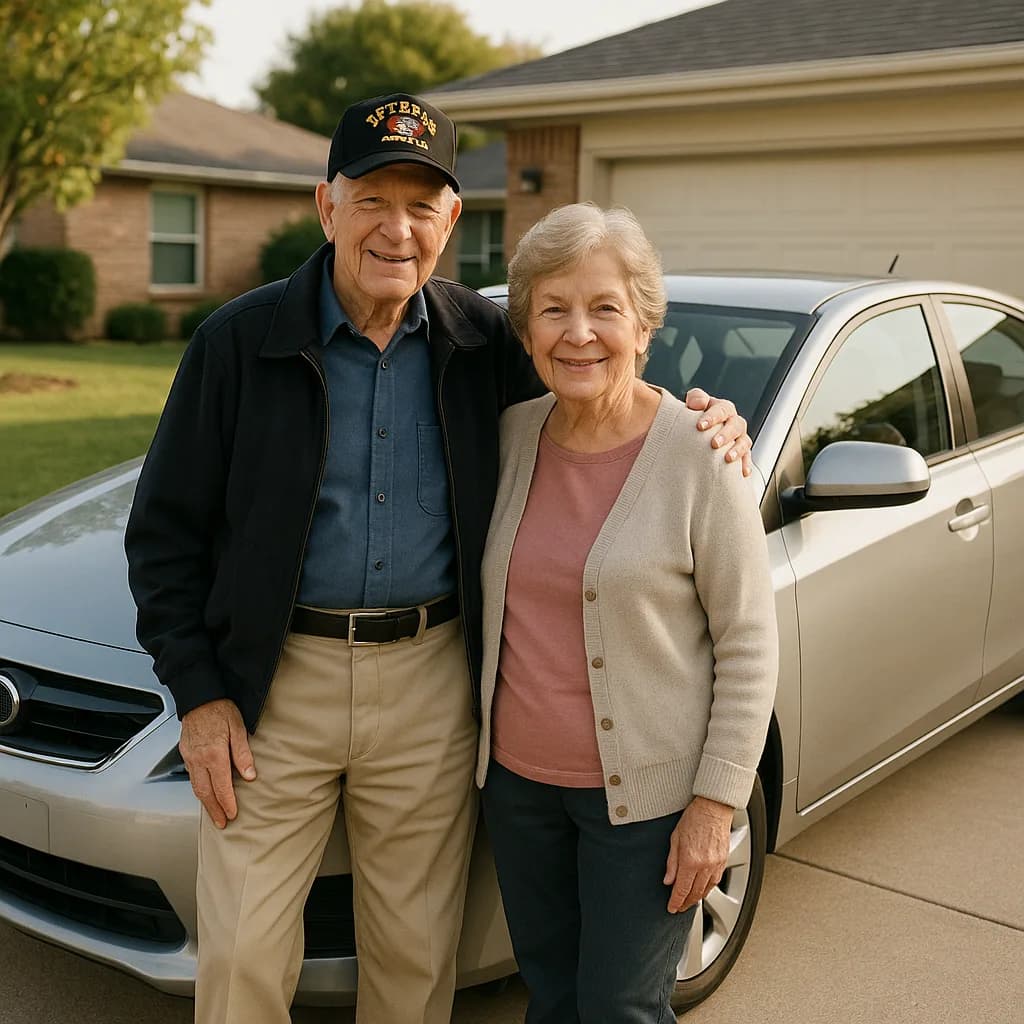
You opened your renewal notice and the premium jumped $40 a month. Your driving record is clean. Your vehicle is paid off. You served your country and you are 67 years old. The carrier raised your rate because of your age bracket, not your risk. Most disabled veterans in California do not realize that the state mandates a mature-driver discount for operators 55 and older, but the law does not fix the percentage—each insurer sets its own amount, and you have to ask for it.
This article walks you through exactly how California Insurance Code §11628.3 works, what documentation your carrier will require, how to verify your course provider is approved, and what happens if you never submit the certificate. The discount exists by law. The problem is that most qualifying veterans never request it, so they keep paying the higher rate while neighbors with identical profiles save every renewal cycle.
Compare rates from carriers that specialize in senior drivers
Mature driver discounts, low-mileage rates, and coverage reviews — see what you're actually eligible for.
Get Your Free QuoteCalifornia Mature-Driver Age Floor
55+
California Insurance Code §11628.3 requires insurers to offer a mature-driver discount to operators aged 55 and older who complete an approved course. The statute does not fix the discount percentage; each carrier sets its own amount in its filed rating plan.
CA Ins. Code §11628.3
The Mandate Exists But the Percentage Does Not
California law requires every auto insurer writing in the state to offer a mature-driver discount to policyholders 55 and older. The statute is clear on eligibility: age 55, completion of a state-approved defensive driving or mature-driver course, and submission of the course certificate to the carrier. What the statute does not specify is how much the discount must be. That decision is left to each insurer's filed rating plan.
This structure creates a procedural gap. The discount is legally required, but the amount varies by carrier. One insurer might file a 5% discount; another might file 12%. You will not know which until you ask your carrier directly and submit the required documentation. Most disabled veterans assume the discount applies automatically at renewal if they qualify by age. It does not. You must request it, complete the course, and submit proof.
The course itself must be on California's approved provider list. Not every online defensive driving course qualifies. If you complete a course that is not state-approved, your carrier will reject the certificate and the discount will not apply. Verify the provider's approval status before enrolling, not after you have paid the course fee and submitted the certificate at renewal.
The blocker: you do not know what your current carrier's mature-driver discount percentage is, and you have not verified whether the course you are considering is on California's approved list.
How to Request the Discount and Submit Documentation
First, contact your current carrier and ask two questions: what is your mature-driver discount percentage for California policyholders aged 55 and older, and which course providers are on your approved list. Do not assume the carrier's customer service representative will volunteer this information. Many will tell you about the discount only if you ask directly. Write down the percentage they quote and the list of approved providers. If the representative cannot answer either question, ask to speak with an underwriting supervisor.
Second, enroll in a state-approved mature-driver or defensive driving course and complete it before your renewal date. The course completion certificate must show your name exactly as it appears on your policy, the course provider's name, the completion date, and the provider's approval number or certification. If any of these elements are missing or incorrect, your carrier may reject the certificate and you will have to re-enroll and resubmit. Most courses are completed online in 4 to 6 hours. Submit the certificate to your carrier at least 30 days before renewal to allow processing time.
Related Articles





What Happens If You Never Submit the Certificate
If you complete the course but never submit the certificate to your carrier, the discount will not appear on your renewal notice. The carrier has no way to know you completed the course unless you provide proof. This is the most common failure mode: a qualifying disabled veteran completes an approved course, assumes the discount will apply automatically, and then pays the full rate for another six or twelve months because the certificate was never filed.
The certificate does not last forever. Most California-approved courses issue certificates valid for three years. If your certificate expires before your next renewal, you will need to complete the course again and submit a new certificate. The carrier will not notify you when your certificate is about to expire. You must track the expiration date yourself and re-enroll before it lapses. If the certificate expires and you do not re-enroll, the discount disappears at the next renewal and you return to the full rate.
Some carriers require you to resubmit documentation every renewal cycle even if your certificate has not expired. This is not a legal requirement; it is a carrier-specific underwriting rule. Ask your carrier whether you need to resubmit annually or only when the certificate expires. If you switch carriers, you will need to submit the certificate to the new carrier during the application process. The discount does not transfer automatically between insurers.
Carriers Writing in California
25
At least 25 carriers write auto insurance in California and are subject to the mature-driver discount mandate under Insurance Code §11628.3. Each carrier files its own discount percentage. Comparing what each offers requires quoting with multiple carriers and asking each one directly.
California Department of Insurance carrier database
How Medicare and Medical Payments Coverage Interact
California does not require personal injury protection coverage, but many policies include optional medical payments coverage. If you are 65 or older and enrolled in Medicare, medical payments coverage may duplicate benefits Medicare already provides. Medicare Part B covers medical expenses resulting from an auto accident, including emergency room visits, diagnostic tests, and follow-up care. Medical payments coverage on your auto policy pays similar expenses up to the policy limit.
If you carry both, Medicare is typically the primary payer and your auto policy's medical payments coverage is secondary. This means Medicare pays first, and medical payments coverage pays only what Medicare does not cover, up to your policy limit. For most disabled veterans on Medicare, a $1,000 or $2,000 medical payments limit is sufficient secondary coverage. Higher limits increase your premium without adding meaningful protection because Medicare already covers the majority of accident-related medical costs. Review your current medical payments limit and consider whether reducing it would lower your premium without exposing you to significant out-of-pocket risk.
Whether Full Coverage Still Makes Sense on a Paid-Off Vehicle
If your vehicle is paid off and its current market value is below $5,000, full coverage may cost more over two or three years than the vehicle is worth. Full coverage includes collision and comprehensive coverage in addition to liability. Collision pays for damage to your vehicle in an at-fault accident; comprehensive pays for theft, vandalism, weather damage, and other non-collision losses. Both coverages are subject to your deductible, and both are priced based on your vehicle's actual cash value.
A 2015 sedan with 110,000 miles might have an actual cash value of $4,200. If your collision and comprehensive premiums total $600 per year and your deductible is $500, you are paying $600 annually to insure a $4,200 asset with a $500 out-of-pocket floor. After seven years of premiums, you will have paid more in coverage costs than the vehicle was worth at the start. This is a judgment call, not a universal rule. If you cannot afford to replace the vehicle out of pocket after a total loss, keeping full coverage may be the right decision even if the math does not favor it. If you have savings set aside for vehicle replacement, dropping collision and comprehensive and keeping only liability coverage will reduce your premium significantly.
Compare What Each Carrier Actually Offers
The mature-driver discount percentage varies by carrier, and the only way to know what each offers is to request quotes and ask directly. State Farm, GEICO, Progressive, and other standard-market carriers writing in California all file different discount percentages under the same statutory mandate. One carrier might offer 8%; another might offer 15%. The difference compounds over time. A $120 monthly premium with an 8% discount drops to $110.40. The same premium with a 15% discount drops to $102. Over twelve months, that is a $100 difference for the same coverage.
When you request quotes, tell each carrier you are 55 or older, ask what their mature-driver discount percentage is, and confirm which course providers they accept. Do not assume the discount will appear automatically in the quote. Many online quote tools do not apply the mature-driver discount unless you explicitly indicate you have completed an approved course. If the quote does not reflect the discount, ask the agent or representative to add it manually and provide a revised quote. Compare the post-discount premium across at least three carriers before making a decision. The carrier with the lowest base rate may not have the lowest rate after applying the mature-driver discount.