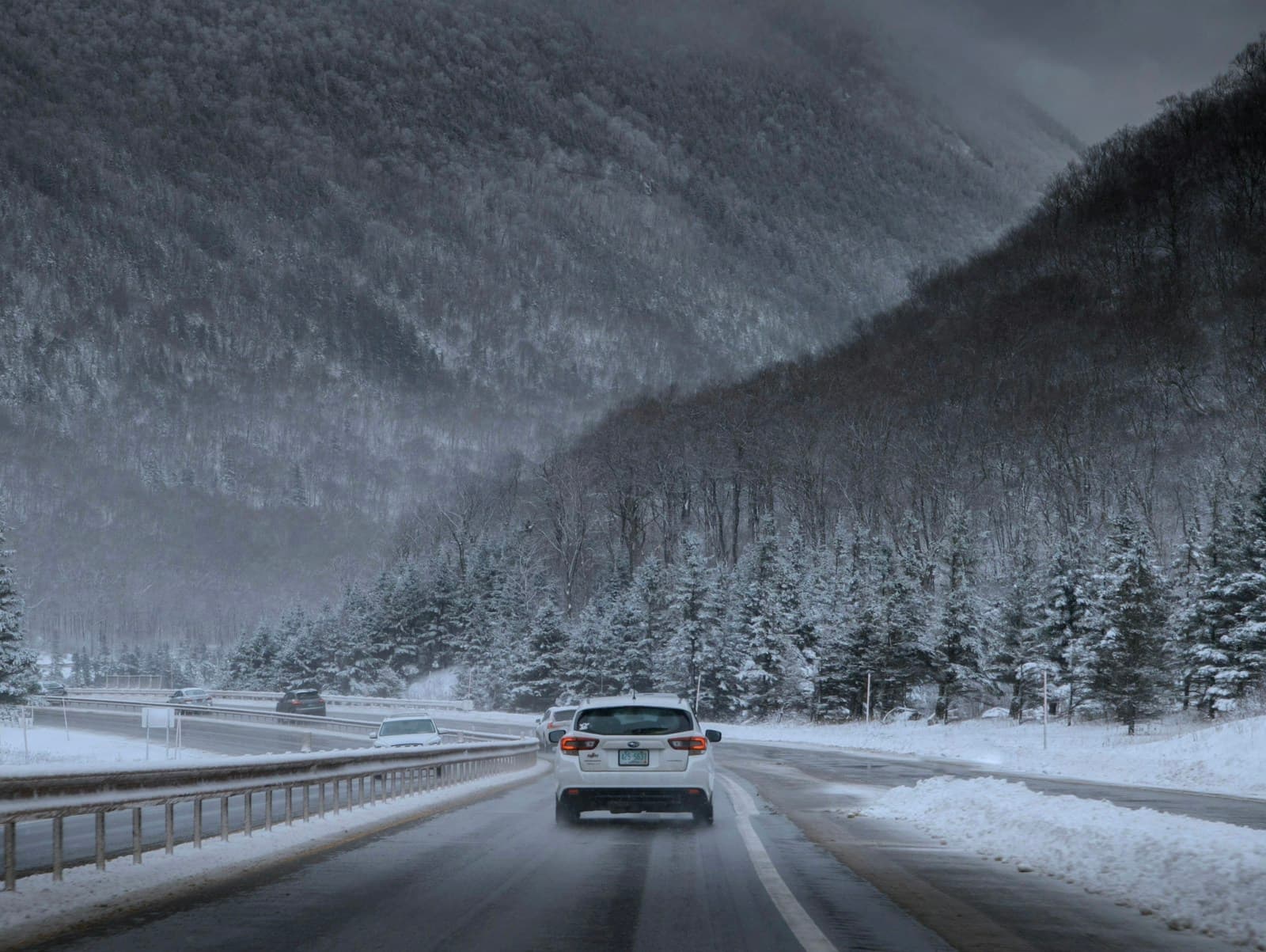
Why Your California Premium Increased When You Left for Summer
You renewed your California auto policy in April before driving to your summer home in Oregon or Arizona. Three months later the renewal notice arrived showing a premium increase with no accident, no ticket, no change in your driving record. The carrier flagged your account as a multi-state exposure the moment you updated your mailing address or mentioned the second residence to your agent.
California insurers rate policies based on the primary garaging address where the vehicle is parked overnight most of the year. When a policyholder splits time between two states, the carrier treats the arrangement as higher-risk exposure unless you clarify which address is primary and provide documentation proving it. Most snowbirds never make that clarification, so the carrier defaults to the address showing higher loss costs or applies a multi-state surcharge that appears nowhere in the policy documents.
Compare rates from carriers that specialize in senior drivers
Mature driver discounts, low-mileage rates, and coverage reviews — see what you're actually eligible for.
Get Your Free QuoteCalifornia Mature-Driver Age
55+
California Insurance Code §11628.3 requires insurers to offer a mature-driver discount to operators aged 55 and older, but the statute does not fix the percentage. Each carrier sets its own amount by filing, so the discount you receive depends entirely on which insurer you ask and whether you submit proof of course completion.
CA Ins. Code §11628.3
What California Law Requires for Snowbird Policies
California does not prohibit insuring a vehicle garaged part-time in another state, but the carrier must know which state is primary. The primary garaging state determines the liability minimums, fault-system rules, and rating factors applied to your policy. California's $15,000 property damage and $30,000 per-person bodily injury minimums are lower than many northern states, so carriers worry about coverage gaps when a snowbird splits time without clarifying jurisdiction.
The mature-driver discount mandate applies regardless of where you spend your summers. California Insurance Code §11628.3 requires every insurer writing auto policies in the state to offer the discount to drivers aged 55 and older. The statute does not fix the percentage, so carriers file their own amounts ranging from 5% to 15% depending on underwriting tier and course-completion status. Most carriers will not apply the discount automatically at renewal. You must request it, submit proof of an approved defensive driving course, and verify the carrier processed the documentation.
If your California policy is primary and you drive the vehicle in another state for four or five months each year, the carrier needs to know. Some insurers require a seasonal-use endorsement; others adjust the rating territory but keep California as the primary state. The failure mode most snowbirds hit is never telling the carrier about the split, then discovering after a summer accident in the other state that the claim is denied because the loss occurred outside the declared garaging territory.
Your carrier will not tell you that updating your summer mailing address triggers a multi-state rating review. Most snowbirds discover the surcharge only when the renewal notice arrives showing the increase with no explanation.
How to Clarify Primary Garaging and Apply the Mature-Driver Discount

Contact your carrier or agent before your next renewal and state explicitly that California is your primary garaging state. Provide documentation proving it: your California driver license showing the in-state address, vehicle registration showing California as the titled state, and a calendar or lease agreement showing you spend more than six months per year at the California residence. Most carriers accept a signed declaration if the license and registration align. The goal is to remove any ambiguity that would trigger multi-state surcharges or rating-territory adjustments.
Once primary garaging is confirmed, request the mature-driver discount in writing. Ask your carrier which defensive driving courses it approves for discount eligibility. California does not maintain a single statewide approved-provider list, so each insurer files its own accepted courses. Complete the course, obtain the certificate, and submit it to your agent with a written request to apply the discount at your next renewal. Verify the discount appears on your renewal declaration page. If it does not, follow up before the renewal date. Certificates typically expire after three years, so calendar a reminder to re-enroll and resubmit before the expiration date or the discount will lapse.
Related Articles



Low-Mileage Programs and Snowbird Driving Patterns
Snowbirds who drive fewer than 7,500 miles per year often qualify for low-mileage or pay-per-mile programs, but the mileage must be verifiable. Carriers offering these programs require either odometer photos submitted at renewal, telematics device installation, or annual inspection verification. If you drive your vehicle from California to your summer home and back each year, that round-trip alone may exceed the mileage threshold depending on distance.
GEICO, Nationwide, and Allstate offer mileage-based programs in California, but each has different verification requirements and eligibility rules. GEICO's program requires odometer submission twice per year. Nationwide uses telematics. Allstate's Milewise is pay-per-mile with a base rate plus per-mile charge, structured for drivers consistently under 10,000 miles annually. If your summer migration adds 3,000 miles round-trip, calculate whether the total annual mileage still qualifies you for the program before enrolling.
The failure mode here is enrolling in a low-mileage program, then exceeding the declared annual mileage because you forgot to account for the seasonal drive. The carrier will either surcharge you at renewal or move you back to standard mileage rating, erasing the savings you planned for. Track your actual mileage for a full year before committing to a mileage-based program.
California Property Damage Minimum
$15,000
California requires $15,000 property damage liability as the statutory floor. Snowbirds with retirement assets exposed in an at-fault accident often carry higher limits because the minimum does not cover total-loss claims on newer vehicles or multi-vehicle accidents. Compare your current limits against your asset exposure before your next renewal.
California auto insurance state minimums
When Full Coverage No Longer Makes Sense
Many snowbirds own paid-off vehicles of moderate age and continue paying for comprehensive and collision coverage out of inertia. If your vehicle is worth less than ten times your annual collision and comprehensive premium combined, dropping those coverages and keeping only liability, uninsured motorist, and medical payments may be the better financial decision. A 12-year-old sedan worth $4,000 with a $500 deductible and $600 annual collision premium will never return more in a claim than you pay in premiums over the vehicle's remaining life.
Medical payments coverage becomes more important for senior drivers because it pays regardless of fault and coordinates with Medicare. California does not require medical payments coverage, but it fills the gap between the accident and Medicare processing. If you are injured in an at-fault accident, your liability coverage will not pay your own medical bills. Medical payments coverage does. Most carriers offer it in $1,000 to $10,000 increments. Verify your policy includes it before dropping collision and comprehensive.
Compare Carriers That Handle Snowbird Policies Well
Not every carrier writing in California handles snowbird arrangements with the same clarity. State Farm, GEICO, and Nationwide all insure vehicles with seasonal out-of-state use, but their documentation requirements and rating approaches differ. State Farm typically requires a seasonal-use endorsement and may adjust your rating territory. GEICO allows primary garaging in California with declared seasonal use in another state without a formal endorsement if the other state is disclosed at application. Nationwide handles it similarly but may require proof of the California address at renewal.
Request quotes from at least three carriers and disclose your snowbird arrangement upfront. Ask each carrier how it rates a vehicle garaged in California for seven months and another state for five months, whether it requires an endorsement, and what documentation it needs to avoid multi-state surcharges. Ask what mature-driver discount percentage it files and which courses it approves. The carrier that gives you the clearest answer to all three questions is the one least likely to surprise you with a surcharge at renewal. Compare the total annual premium including the mature-driver discount applied, not the base rate before discounts.