
Why Your Renewal Notice Shows No Discount
You completed your defensive driving course, you served in the military, and your renewal notice arrived with the same premium you paid last year. Your neighbor mentioned saving on their policy, but your carrier never applied anything. This is the most common frustration senior veterans face in Nevada: the state requires insurers to offer mature-driver discounts, but carriers set their own percentages and most do not apply them unless you ask. Veteran and military discounts work the same way—they exist, but enrollment is manual.
Nevada law guarantees the mature-driver discount exists, but NRS 690B.029 leaves the percentage to each insurer's filed rates. That means a qualifying senior veteran holds two separate discount pathways—one age-based, one service-based—and both require you to initiate the request and submit documentation. Most carriers will not scan your policy for eligibility at renewal. If you never ask, you keep paying the higher rate indefinitely while the discount sits unused in the rate filing.
Compare rates from carriers that specialize in senior drivers
Mature driver discounts, low-mileage rates, and coverage reviews — see what you're actually eligible for.
Get Your Free QuoteNevada Mature-Driver Age Floor
55+
NRS 690B.029 requires insurers to offer a mature-driver discount to operators aged 55 and older with a clean driving record. The statute mandates the discount but does not fix the percentage—each carrier sets its own amount in filed rates.
NRS 690B.029, https://www.leg.state.nv.us/nrs/nrs-690b.html
What Nevada Law Actually Requires
Nevada statute requires every insurer writing auto policies in the state to offer a mature-driver discount to drivers aged 55 and older who maintain a clean record. The law does not specify a percentage. Some carriers file 5%, others file 10%, and a few file tiered structures where the percentage increases at age 65 or after course completion. You will not know what your carrier's filed percentage is until you ask them directly or request a quote breakdown.
The mature-driver discount is age-based, but most carriers increase the percentage if you complete a state-approved defensive driving course. Nevada does not maintain a single statewide approved-provider list—carriers accept courses approved by their own underwriting guidelines, typically including AARP Smart Driver, AAA, and NSC Defensive Driving. You must verify with your specific carrier that the course provider you choose qualifies before you enroll. Certificates submitted from non-approved providers get rejected at renewal, and the discount never applies.
Veteran and military discounts are not mandated by Nevada law. Carriers offer them voluntarily, and eligibility rules vary widely. USAA restricts eligibility to active duty, veterans, and their families. GEICO, Progressive, and State Farm offer military discounts to a broader set of service members and veterans, but each has different documentation requirements and discount structures. Some apply the discount automatically if military status appears in your application; most require you to submit a DD-214 or current military ID and explicitly request enrollment.
The blocker: you hold two separate discount pathways—mature-driver and veteran—but neither applies unless you request enrollment, submit documentation, and verify the course provider is carrier-approved.
How to Enroll in Both Discounts
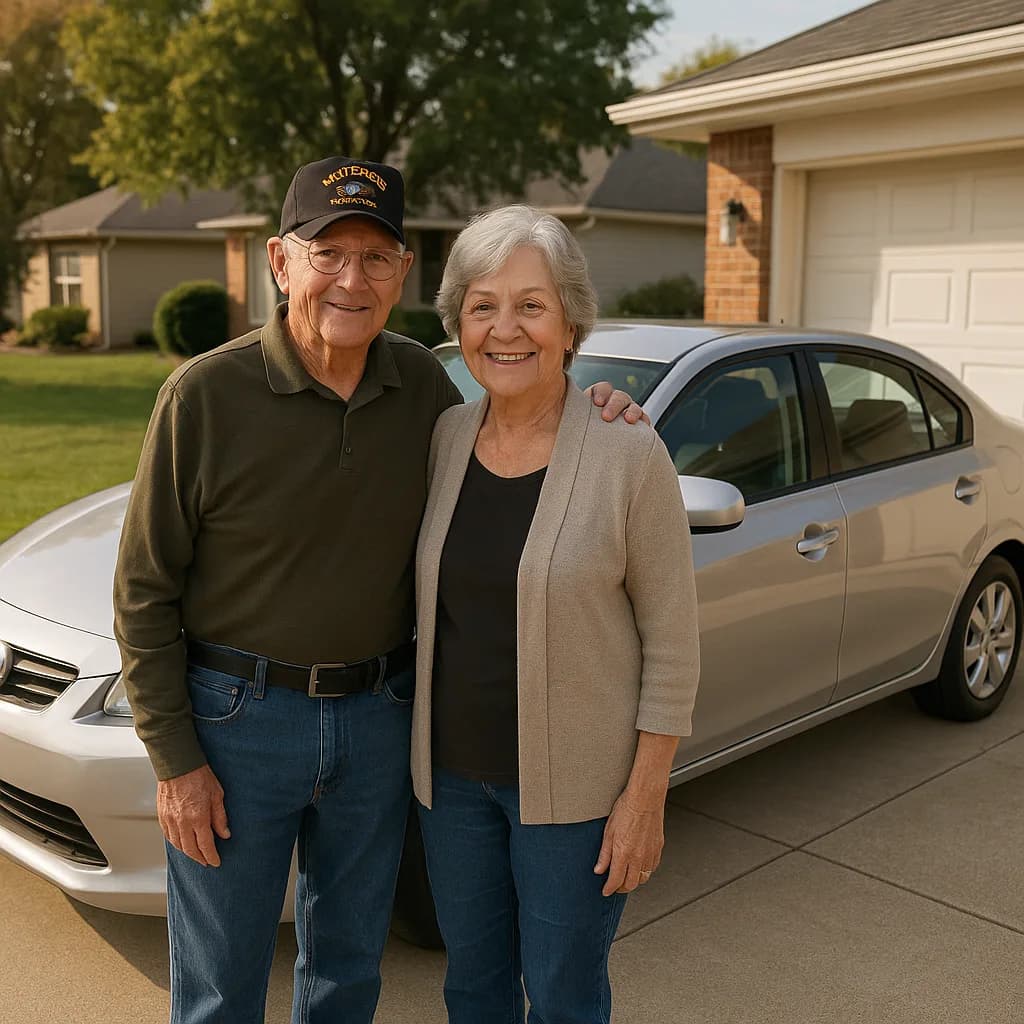
Start with the mature-driver discount. Call your carrier or log into your online account and ask explicitly: what is your filed mature-driver discount percentage for a driver aged 55 or older, does the percentage increase with course completion, and which defensive driving course providers do you accept. Write down the percentage they quote and the list of approved providers. If they say the discount is already applied, ask them to show you the line item on your current policy declaration page. Many agents will say it is included when it is not.
Enroll in a carrier-approved course within 30 days of confirming the provider is accepted. Complete the course and request the certificate of completion. Submit the certificate to your carrier immediately—do not wait until renewal. Most certificates are valid for three years, but some carriers require re-submission at every renewal cycle even if the certificate has not expired. Ask your carrier how long the discount remains active and whether you need to re-enroll. For the veteran discount, contact your carrier separately and ask what documentation they require. Submit your DD-214 or military ID and request explicit confirmation that the discount has been applied to your policy. Ask whether the discount renews automatically or requires re-verification.
Related Articles


Nevada-Specific Enrollment Failures
Nevada's transient population creates a common failure mode: senior veterans who moved to Nevada within the past year often carry policies issued in their previous state. When they call to update their address, the carrier re-rates the policy under Nevada rules but does not automatically apply Nevada-mandated discounts unless the policyholder requests them. You must explicitly ask for the mature-driver discount after any state-to-state policy transfer, even if you held the same discount in your prior state.
Another failure mode specific to Nevada: some carriers accept online defensive driving courses, others require in-person attendance, and a few accept only courses taught by specific organizations. If you complete an online course and your carrier only accepts in-person certificates, the discount gets denied at renewal and you must re-enroll in an approved format. Verify the format requirement before you pay for the course.
Veteran discounts disappear at renewal more often than mature-driver discounts because some carriers treat military status as a one-time enrollment rather than a permanent profile attribute. If your discount was applied when you first bought the policy but is missing from your renewal notice, the carrier may have dropped it during a system migration or underwriting review. Call and request re-enrollment with the same documentation you submitted originally.
Nevada Bodily Injury Minimum Per Person
$25,000
Nevada requires $25,000 per person, $50,000 per accident bodily injury liability, and $20,000 property damage. Senior veterans on fixed income often carry only the state minimum, but retirement assets and home equity are exposed in an at-fault accident. Liability limits above the minimum cost less than most drivers expect.
Nevada DMV, dmvnv.com
Coverage Fit for Senior Veterans
Many senior veterans own paid-off vehicles and question whether full coverage remains cost-justified. The judgment call turns on vehicle value and your financial position. If your vehicle is worth less than ten times your six-month premium, dropping collision and comprehensive and banking the premium savings often makes sense. If the vehicle is worth more, or if replacing it out-of-pocket would strain your budget, keeping full coverage is the safer path. Run the math with your actual premium and vehicle value before deciding.
Medical payments coverage and personal injury protection overlap with Medicare, but they pay first in an accident. Medicare is secondary and will not cover costs until your auto policy limits are exhausted. If you carry Medicare and no med-pay or PIP, you pay out-of-pocket up to your deductible before Medicare begins. A small med-pay limit—typically $5,000 or $10,000—costs little and closes that gap. Ask your carrier what adding med-pay would cost before dropping it to save premium.
Compare Carriers That Handle Senior Veterans Well
USAA writes only for military members, veterans, and their families, and their underwriting treats military service as a risk-reduction factor rather than a demographic checkbox. USAA applies both mature-driver and military discounts without requiring separate requests in most cases, and their renewal process preserves both discounts automatically. Eligibility is restricted, but if you qualify, USAA consistently delivers lower premiums for senior veterans than general-market carriers.
GEICO, Progressive, and State Farm all write in Nevada and offer both mature-driver and military discounts, but enrollment is manual and you must verify at every renewal that both discounts remain applied. GEICO and Progressive offer online quoting; State Farm requires an agent. If you are comparing rates, request quotes from at least three carriers and ask each one explicitly what their mature-driver percentage is, what their military discount structure is, and whether either discount requires annual re-enrollment. Write down what each agent tells you and compare the total premium after both discounts are applied, not the base rate.
Request Both Discounts Before Your Next Renewal
Call your current carrier this week. Ask three questions: what is your mature-driver discount percentage, which course providers do you accept, and what documentation do I need to submit for the veteran discount. If they cannot answer all three, ask to speak to an underwriter. If your carrier's combined discount total is lower than what competitors quoted, request quotes from USAA, GEICO, and Progressive and compare the post-discount premiums. Do not wait until renewal—most carriers will not backdate discounts, so every month you delay costs you the savings you already qualified for.