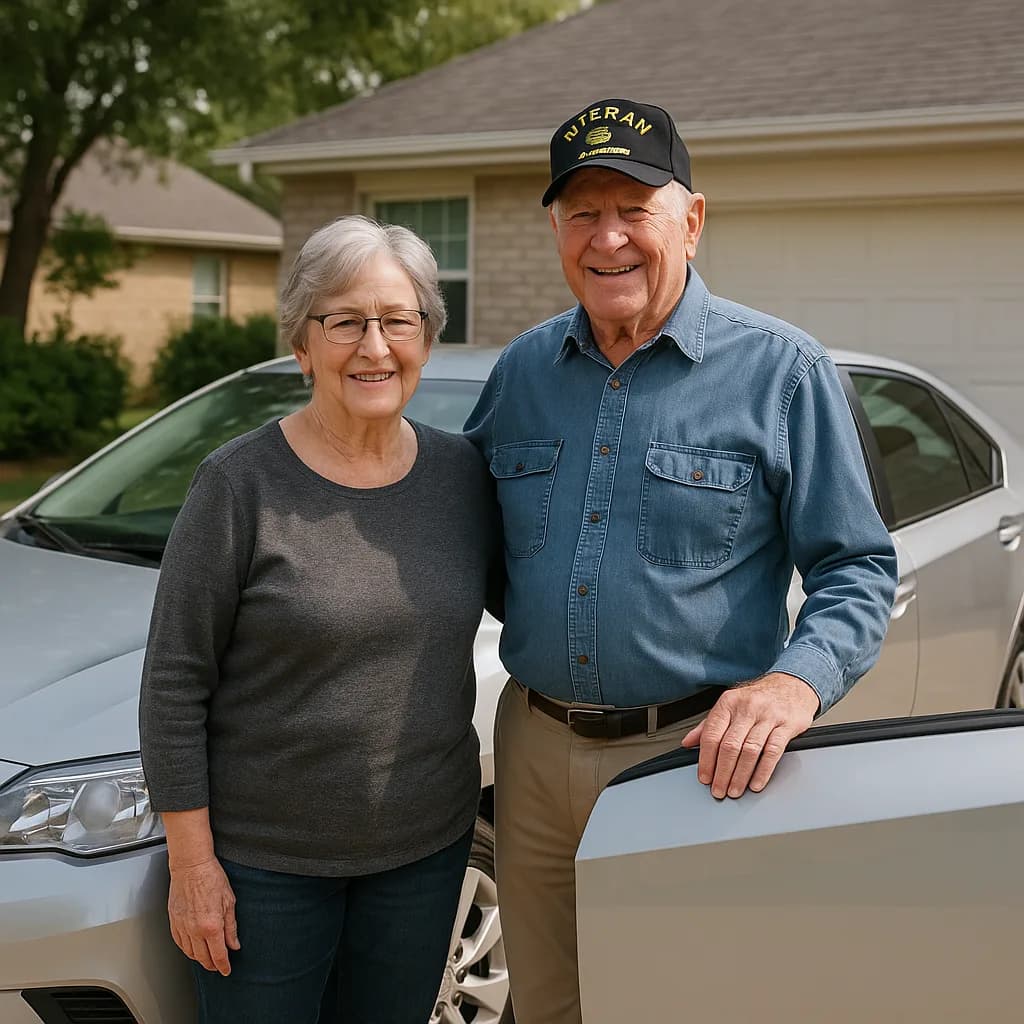
When Your Renewal Notice Ignores Your Course Certificate
You completed the defensive driving course your VA benefits counselor recommended, mailed the certificate to your insurance agent three weeks before renewal, and expected to see a discount when the new policy arrived. Instead, your premium increased $18 per month with no explanation. You called the carrier and learned they never applied the mature-driver discount because Vermont law doesn't require them to offer one, and you never asked whether they do.
This scenario plays out across Vermont every renewal cycle. Senior veterans assume the course certificate triggers an automatic discount because neighboring states mandate them by statute. Vermont doesn't. Carriers may offer mature-driver discounts voluntarily, but most set their own eligibility rules, approval processes, and discount amounts. If you never ask what your carrier offers and submit documentation they recognize, you keep paying full rates while qualifying neighbors save.
Compare rates from carriers that specialize in senior drivers
Mature driver discounts, low-mileage rates, and coverage reviews — see what you're actually eligible for.
Get Your Free QuoteVermont Bodily Injury Minimum Per Person
$25,000
Vermont requires $25,000 bodily injury per person, $50,000 per accident, and $10,000 property damage. Senior veterans on fixed income often carry only the minimum, but retirement assets are exposed in an at-fault accident when damages exceed these floors.
Vermont Department of Motor Vehicles
No State Mandate Means Carrier-by-Carrier Rules
Vermont law does not require insurers to offer a mature-driver discount. Carriers operating in the state may offer one voluntarily, but each sets its own percentage, eligibility age, course requirements, and documentation process. Some accept any state-approved defensive driving course; others require completion through a specific provider. Some apply the discount automatically at age 55; others require you to request it and resubmit proof every three years.
The structural gap: you cannot assume your current carrier offers the same discount your neighbor gets from a different carrier, and you cannot assume the course you completed meets your carrier's approval standards. The only way to know what discount applies to your policy is to ask your carrier directly, confirm the course provider is on their approved list, and submit documentation in the format they require.
Most senior veterans never take these steps. They complete a course, assume the discount will appear at renewal, and continue paying full rates when it doesn't. The carrier has no obligation to notify you that a discount exists or that your submitted certificate doesn't meet their requirements.
Your carrier won't tell you the discount exists, won't notify you when your certificate expires, and won't re-apply it unless you ask and submit new proof.
What Qualifying Senior Veterans Must Verify

First, ask your current carrier whether they offer a mature-driver discount, what the eligibility age is, and what percentage they apply. Write down the name of the person you spoke with and the date. Some carriers offer 5% for drivers 55 and older; others offer 10% starting at age 65. Some require course completion; others apply an age-based discount automatically but increase it if you complete an approved course. Get the specific terms in writing before you enroll.
Second, ask which course providers your carrier accepts. Vermont has no state-approved course list for insurance discounts, so each carrier maintains its own. AARP Driver Safety, AAA, and NSC Defensive Driving are widely accepted, but some carriers require completion through a specific vendor or reject online courses entirely. Completing a course your carrier doesn't recognize wastes your time and money. Verify the provider name and course format before you pay the enrollment fee.
Related Articles






How Course Certificates Expire and Discounts Disappear
Most carriers that offer mature-driver discounts require certificate renewal every three years. The discount applies from the date you submit proof, not the date you completed the course. If your certificate expires before your next renewal, the discount disappears. The carrier will not notify you that it lapsed. Your premium increases, and unless you complete a new course and submit a new certificate, you pay the higher rate indefinitely.
This failure mode hits senior veterans hardest because VA benefits counselors often recommend the course without explaining the renewal requirement. You complete it once, assume it applies for life, and three years later your premium jumps with no explanation. The carrier's position: the discount was always conditional on current certification, and you never re-enrolled.
Check your policy documents for the discount expiration date. If the certificate expires within six months of your next renewal, enroll in a new course now. Most courses take 4-6 hours to complete online and cost between $20 and $30, but your carrier sets the price, not the state. Submit the new certificate at least 30 days before renewal to ensure it processes in time.
Carriers Writing Vermont Auto Policies
15
Fifteen carriers write standard and non-standard auto insurance in Vermont. Not all offer mature-driver discounts, and those that do set their own percentages and eligibility rules. Senior veterans must compare carrier-specific programs, not just premiums.
Vermont Department of Financial Regulation carrier database
When Full Coverage No Longer Makes Sense
Many senior veterans carry comprehensive and collision coverage on paid-off vehicles worth less than $5,000. The annual premium for full coverage often exceeds 20% of the vehicle's actual cash value, and after a claim, the payout is the depreciated value minus your deductible. If your vehicle is worth $4,000 and your deductible is $1,000, the maximum claim payout is $3,000. You're paying $800 per year to insure a $3,000 risk.
The coverage-fit decision: if your vehicle is paid off, worth less than $5,000, and you have savings to replace it without financing, dropping comprehensive and collision makes financial sense. Keep liability coverage at limits that protect your retirement assets—most senior veterans should carry at least $100,000 per person and $300,000 per accident, well above Vermont's $25,000/$50,000 minimum. Add uninsured motorist coverage at the same limits. Drop the collision and comprehensive. The premium savings often exceeds $600 per year.
Compare Carriers That Handle Senior Profiles Well
Not all carriers treat senior veterans the same. Some apply age-based rate increases starting at 65; others hold rates flat until 75. Some offer low-mileage programs for retirees who drive fewer than 7,500 miles per year; others don't. Some bundle mature-driver discounts with military or federal employee discounts; others make you choose one. The only way to know which carrier offers the best combination for your profile is to compare quotes from at least three.
Request quotes from carriers that write standard policies in Vermont and explicitly ask whether they offer mature-driver discounts, what the eligibility requirements are, and whether they stack with military discounts. GEICO, USAA, State Farm, and Progressive all write Vermont policies and offer mature-driver programs, but the percentages and eligibility rules differ. Get the discount terms in writing before you switch. A lower base premium with no mature-driver discount may cost more annually than a higher base premium with a 10% discount applied.
When you compare, provide identical coverage limits and deductibles. A quote that looks cheaper because it carries lower liability limits or higher deductibles isn't a fair comparison. Lock in the coverage structure first, then compare the premium with all applicable discounts applied. Ask each carrier to email you a summary of discounts they applied and the expiration date of any course-based discount.
Request Quotes with Your Discount Documentation Ready
Before you contact carriers for quotes, gather your current policy declarations page, your driver's license, your vehicle registration, and your defensive driving course certificate if you have one. If you completed a course more than three years ago, the certificate is expired and you'll need to enroll in a new one. If you haven't completed a course yet, ask each carrier which providers they accept before you enroll.
When you request quotes, ask three questions: Does your carrier offer a mature-driver discount? What percentage do you apply, and at what age does it start? Which course providers do you accept, and how often must I renew the certificate? Write down the answers. If the agent can't answer, ask them to email you the underwriting guidelines. Carriers that can't or won't answer these questions before you buy are unlikely to apply the discount correctly after you switch.
Get quotes from at least three carriers. Compare the annual premium with all discounts applied, not the monthly payment. Verify that the mature-driver discount appears on the quote summary. If it doesn't, ask why. Some carriers require you to submit the certificate after the policy binds; others won't quote the discount until they see proof. Know which process your carrier uses before you commit.