
Why Your Kansas Premium Rose Despite a Clean Record
You opened your renewal notice and the premium increased again. No accidents, no tickets, the same vehicle, the same address. Your carrier adjusted your rate based on age-bracket actuarial tables, not your individual driving history. Kansas law does not cap age-based rating factors, so insurers price risk by age cohort even when your record contradicts the cohort average.
The state does require every insurer to offer a mature-driver discount, but K.S.A. 40-1112a sets no statutory percentage. Each carrier files its own amount with the Kansas Insurance Department, and most do not apply it automatically. If you never asked your agent or submitted proof of course completion, you have been paying the higher rate while qualifying neighbors saved.
Compare rates from carriers that specialize in senior drivers
Mature driver discounts, low-mileage rates, and coverage reviews — see what you're actually eligible for.
Get Your Free QuoteKansas Mature-Driver Discount Mandate
Required
K.S.A. 40-1112a requires insurers to provide an appropriate reduction for accident avoidance course completion, but the statute does not fix the percentage. Each carrier sets its own amount by filing, so the discount you receive depends entirely on which insurer you ask and whether you submit the course certificate.
K.S.A. 40-1112a
What the State Mandate Actually Guarantees
Kansas law guarantees the discount exists, not the amount. The statute is age-neutral: any driver who completes a state-approved defensive driving course qualifies, regardless of age. Insurers market it as a senior or mature-driver discount because drivers over 65 are the primary enrollees, but the legal basis is course completion, not age.
The absence of a statutory percentage means you cannot assume your carrier's discount matches your neighbor's. One insurer may file a 5 percent reduction, another 10 percent, a third 8 percent. The only way to know what yours is: ask your agent directly, confirm the percentage in writing, and verify it appears on your next declaration page.
The course must be state-approved. Kansas does not publish a single statewide approved-provider list; instead, insurers accept courses approved by their own underwriting guidelines, typically AARP Smart Driver, AAA Driver Improvement, or National Safety Council Defensive Driving. Before enrolling, confirm with your carrier that the specific course provider you are considering qualifies under their filing. A certificate from an unapproved provider will be rejected at renewal, and you will have paid for a course that produces no discount.
The blocker: you do not know what percentage your current carrier filed, whether the course provider you are considering is on their approved list, or whether the discount you received three years ago still applies.
How to Verify Your Current Discount Status

Pull your current declaration page and look for a line item labeled mature driver discount, defensive driving discount, or accident prevention course discount. If the line is absent, the discount is not applied. If the line is present, note the dollar amount or percentage shown. Then call your agent and ask three questions: what percentage does your carrier currently file for the mature-driver discount, when does my course certificate expire, and do I need to submit a new certificate at the next renewal to keep the discount active.
If your certificate expired and the discount disappeared, you must re-enroll in an approved course and submit the new certificate before your next renewal. Most carriers require the certificate on file before the renewal effective date; submitting it two weeks after renewal will not retroactively apply the discount. If you completed a course years ago and never submitted the certificate, the discount never applied. Retrieve the certificate from the course provider if possible, or re-enroll if the original is lost or expired.
Related Articles


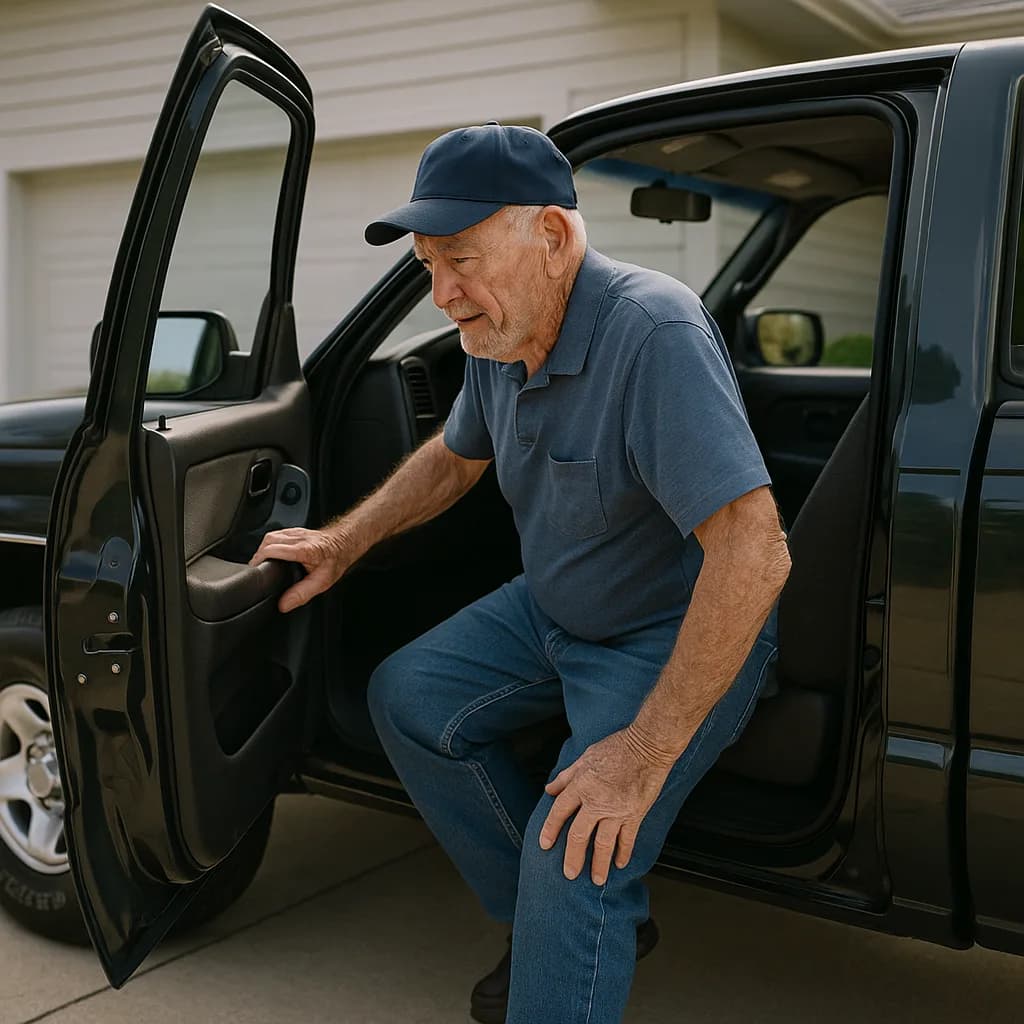



What Senior Veterans Should Carry in Kansas
Kansas requires liability minimums of $25,000 per person, $50,000 per accident for bodily injury, and $25,000 for property damage. The state also mandates personal injury protection coverage and uninsured motorist coverage. These minimums applied when you were 40 and still apply now, but your asset exposure changed. If you own a home, hold retirement accounts, or have savings, the minimum liability limits leave those assets exposed in an at-fault accident where damages exceed $50,000.
Many veterans over 65 carry the same liability limits they selected decades ago. Increasing bodily injury coverage to $100,000 per person and $300,000 per accident costs less than most expect, typically $8 to $15 more per month depending on your driving record and location. The incremental cost is small relative to the asset protection it provides.
If your vehicle is paid off and worth less than $4,000, dropping collision and comprehensive coverage is a judgment call. The rule of thumb: if the annual premium for full coverage exceeds 10 percent of the vehicle's current value, you are paying more to insure it than it is worth. Check your declaration page for the collision and comprehensive premium, then compare that total against your vehicle's actual cash value. If the math does not justify full coverage, liability-only with higher limits is the more rational allocation.
Medical payments coverage and personal injury protection overlap with Medicare for veterans over 65. Kansas requires PIP, so you cannot drop it, but you can coordinate benefits. PIP pays first for accident-related medical expenses up to the policy limit, then Medicare covers remaining costs. If you carry a Medicare supplement plan, the supplement may cover the PIP deductible. Verify coordination rules with both your insurer and your Medicare supplement provider to avoid paying twice for the same coverage.
Kansas Bodily Injury Minimum Per Person
$25,000
Kansas law requires $25,000 per person in bodily injury liability, but that floor was set decades ago and does not reflect current medical costs or asset-exposure realities for retirees. A single serious injury can exceed $25,000 in the first week of treatment, leaving your retirement assets exposed in an at-fault accident.
Kansas auto insurance state minimum liability requirements
Which Kansas Carriers Handle Senior Profiles Well
Not all carriers price senior drivers the same way. Some apply aggressive age-bracket increases starting at 65; others tier more gradually and weight driving history more heavily than age. The carriers most likely to offer competitive rates for senior veterans with clean records: State Farm, USAA (if you are eligible based on military service), Auto-Owners, and Farmers. All four write in Kansas, offer mature-driver discounts, and allow online or phone quotes.
USAA restricts eligibility to active-duty military, veterans, and their immediate family members. If you served and have not checked USAA rates in the past five years, request a quote. USAA consistently ranks among the lowest-cost options for senior veterans and applies the mature-driver discount automatically when you submit course proof. State Farm and Auto-Owners require agent contact but offer strong multi-policy bundling discounts if you also insure your home with them.
What to Do Right Now
Call your current agent and ask what mature-driver discount percentage your carrier filed, whether your course certificate is still on file and current, and what the expiration date is. If the certificate expired or was never submitted, enroll in an AARP Smart Driver or AAA Driver Improvement course within the next 30 days and submit the certificate before your next renewal. Then request quotes from USAA, State Farm, and Auto-Owners with the same coverage limits you currently carry, confirm each quote includes the mature-driver discount, and compare the declaration pages side by side. The carrier charging you the least today may not be the carrier charging you the least next year.